matchbuzzfeed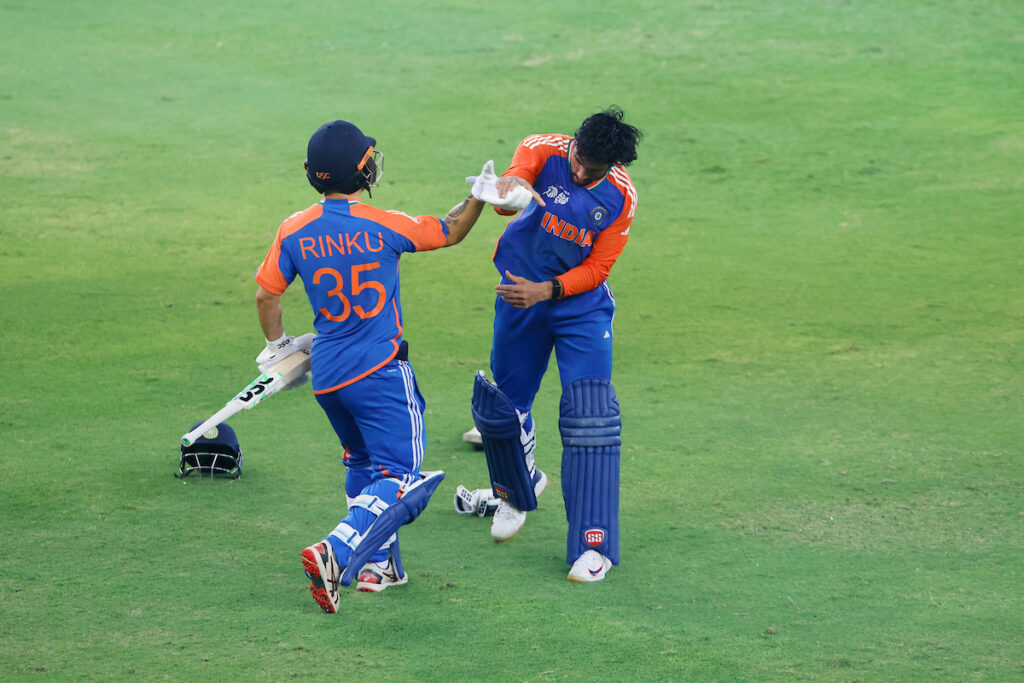
Tilak Varma of India and Rinku Singh of India celebrates after winning the Final match of the DP World Asia Cup 2025 between India and Pakistan at the Dubai International Stadium, Dubai, United Arab Emirates, on 28 September 2025. Photo by Vipin Pawar / CREIMAS for Asian Cricket Council
Umpiring in cricket has evolved dramatically over the past two decades, from relying solely on human judgment to incorporating an array of technological aids. By 2025, hawk‑eye ball tracking, front‑foot no‑ball detection and the Decision Review System (DRS) were entrenched features in international cricket. The next frontier involves refining these tools, improving accuracy and exploring new applications to enhance fairness. The balance between automation and preserving the game’s flow remains delicate, with debates around when and how technology should intervene.
One innovation introduced in 2025 is “UltraEdge 2.0”, an upgraded version of the audio‑visual system used to detect faint edges. Developed by a consortium of tech companies in collaboration with the ICC, the new system employs artificial intelligence to differentiate between noises produced by bat, pad, clothing and environmental factors like crowd noise. In early trials during the WPL, it reduced false positives by 40% and enabled quicker decisions. Another experimental tool is “Smart Bails”, which incorporate sensors that can detect dislodgement within a millisecond, ensuring run‑out and stumping decisions are accurate even in windy conditions or when LED bails fail to light up due to impact vibration.
The introduction of ball‑tracking for pitch‑map analysis in real time has also changed how teams approach field placements. During the 2025 Asia Cup, broadcasters displayed bowlers’ release points and seam positions live on screen, with commentators explaining how subtle changes affected movement. Coaches in dressing rooms used this data to adjust plans on the fly, instructing bowlers to alter their wrist positions or target different lines. While some purists worry that such constant data flow may reduce spontaneity, players argue that it enhances understanding and skill development.
However, technology is not infallible. Instances where ball tracking showed different trajectories on near‑identical deliveries sparked controversy. In one high‑profile incident during the Pakistan–Sri Lanka Test, a delivery that appeared to strike the batter in front of off stump was adjudged “umpire’s call” despite replays suggesting it would have hit leg stump. Critics accused the system of inconsistency, prompting the ICC to commission an independent audit. The review found that while technology increases fairness overall, slight variances in camera angles and frame rates can produce marginally different predictions. The findings have led to calls for greater transparency in how algorithms process data.
Another contentious issue is the human element. Some former players lament the diminishing authority of on‑field umpires, suggesting that constant referrals undermine their confidence. Others propose expanding DRS to include umpire‑initiated referrals when they are genuinely uncertain, rather than relying solely on player challenges. The ICC is also exploring whether to mic‑up umpires during reviews, allowing audiences to hear explanations in real time, similar to rugby union. Such transparency could demystify decisions and enhance fan engagement.
As technology advances, cricket must navigate privacy and ethical considerations. High‑resolution cameras capture players’ every move, raising questions about data ownership and usage. The ICC has introduced guidelines to protect players’ biometric data and restrict commercial exploitation of match footage for targeted advertising. Players’ associations are advocating for consent mechanisms and revenue sharing if broadcasters use their images in novel applications.
In the long run, umpiring technology aims to strike a balance: eliminating glaring errors while preserving the human drama that makes cricket compelling. The challenge for administrators is to implement innovations in a way that enhances fairness without turning the sport into a sterile, overly automated spectacle. The ongoing dialogue between technologists, players, umpires and fans will shape how cricket officiating evolves over the next decade.