Why the introduction of the Anderson‑Tendulkar Trophy for England vs India Tests matters for red-ball cricket.
 matchbuzzfeed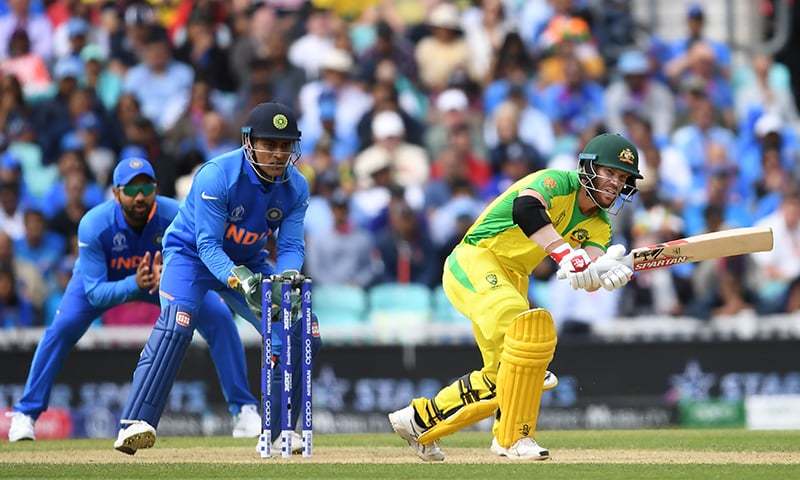
Australia's David Warner (R) is watched by India's Mahendra Singh Dhoni as he plays a shot during the 2019 Cricket World Cup group stage match between India and Australia at The Oval in London on June 9, 2019. (Photo by Dibyangshu SARKAR / AFP) / RESTRICTED TO EDITORIAL USE
In a landmark decision, the International Olympic Committee announced in mid‑2025 that cricket would return to the Olympics at the 2028 Los Angeles Games, more than a century after its only previous appearance in 1900. The inclusion, primarily in the T20 format, came after years of lobbying from the International Cricket Council (ICC), which sought to expand the sport’s reach and capitalise on the growing popularity of short‑form cricket. The decision has far‑reaching consequences for cricket’s governance, player workloads, broadcast rights and global growth initiatives.
At a governance level, the ICC must collaborate with national Olympic committees to establish qualification pathways. Preliminary reports suggest that six to eight teams will compete in the men’s and women’s tournaments, with spots allocated based on rankings and regional qualifiers. This system has drawn mixed responses; Full Member nations worry about the dilution of talent if key players are unavailable, while Associate members see it as an opportunity to gain exposure. The ICC is considering a qualifying event in early 2027 that would double as a warm‑up for the T20 World Cup, ensuring that teams entering the Olympics are match‑sharp.
For players, the Olympics present both opportunity and challenge. Winning a gold medal carries prestige that could elevate cricket’s status in countries where it remains a niche sport. However, fitting the Games into an already packed calendar is complex. The 2028 Olympics will take place in July and August, traditionally reserved for bilateral series in England, Sri Lanka and the Caribbean. National boards will need to make scheduling compromises, potentially shifting domestic tournaments or resting players from tours. Franchise leagues like the IPL and The Hundred may shorten their seasons to accommodate Olympic participation. Players will also need to adapt to multi‑sport village life, anti‑doping protocols and the unique pressure of representing their country on a global stage beyond cricket fans.
The inclusion of women’s cricket is particularly significant. It offers an unparalleled platform to showcase the athleticism and skill of female cricketers to audiences who may not otherwise watch cricket. Administrators hope that success at the Olympics will accelerate the professionalisation of women’s cricket worldwide, encouraging sponsors and broadcasters to invest more in domestic leagues. Countries like Brazil, the United States and Germany are already increasing funding to their women’s programmes, aiming to qualify and make a mark.
From a broadcast perspective, the Olympics will expose cricket to a new demographic. NBC, the American network with rights to the 2028 Games, has limited experience covering cricket. The ICC plans to provide production expertise and commentators to ensure quality coverage. There are also discussions about using the Olympics to trial innovations such as real‑time mic‑up with batters or coaches, providing viewers with unprecedented insights. Such features could later be adopted in international cricket.
Critics caution that the T20 format’s inclusion at the Olympics should not come at the expense of Test and ODI cricket. They argue that administrators must ensure the Olympics complements existing structures rather than cannibalising them. There are also concerns about player burnout and commercial exploitation. Nevertheless, most stakeholders agree that Olympic cricket presents an opportunity to embed the sport in the global sporting consciousness. For children in non‑traditional cricket nations, seeing cricketers alongside sprinters and gymnasts could spark interest that no amount of marketing campaigns ever could. As the cricketing world prepares for 2028, the focus will be on balancing tradition with innovation and ensuring that the Olympics leaves a positive legacy for the sport.